Secularism in Turkey
Secularism in Turkey, known as laiklik, is the constitutional principle that the state and religion are kept apart: since the republic's founding in 1923, Turkey has defined itself as a secular, democratic, and social state, and the 1924 reforms removed the sultanate, the caliphate, and the religious courts in a single sweep. That separation was never a neutral arrangement; it was a founding choice made by the Republic's founders to break the Ottoman empire's theocratic legacy, and it is the single most contested idea in Turkish public life.
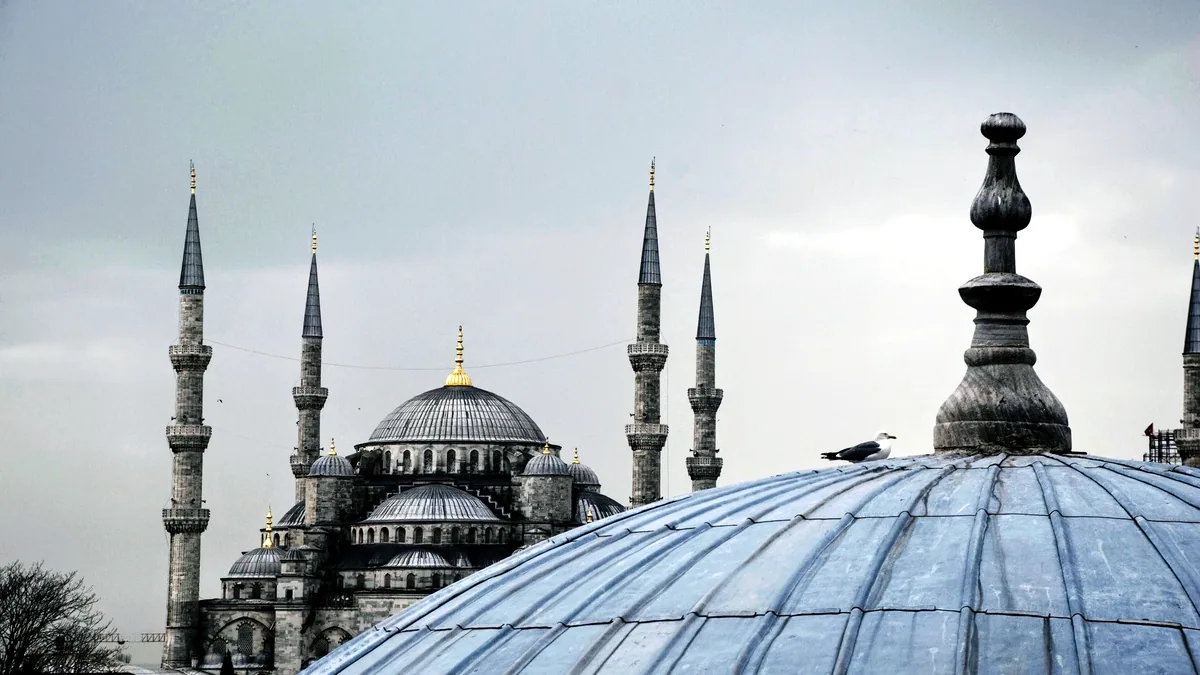
What laiklik means in the Turkish context
What laiklik means in Turkey differs from French laïcité and the American separation of church and state. Turkey is a Sunni Muslim-majority country, so the state's relationship with religion shapes daily life far more directly than in Western examples. The Turkish model combines 3 core features: a constitutional separation of state and religion, a state-directed religious bureaucracy, and a civic identity that privileges Turkish nationality over religious identity.
The constitutional framework
The constitutional framework is anchored in the 1924 constitution, which first declared the state secular, and in article 2 of the current 1982 constitution, which defines Turkey as a "secular, democratic and social state." The Directorate of Religious Affairs, known as the Diyanet, was established by law in 1924 to supervise religious services, appoint imams, and issue fatwas on behalf of the state. The Diyanet employs tens of thousands of officials and controls the mosques, which is a structure that no Western secular state replicates.
The headscarf debate and the state's role
The headscarf debate is the sharpest test of laiklik in practice, because it turned a personal choice of clothing into a constitutional question about where the state's secular authority ends. The debate unfolded in 3 major phases: a university ban, a public-sector ban, and a partial liberalization.
From university ban to liberalization
- The headscarf was banned at universities in 1981, and the ban was reinforced by a 1982 constitutional article that made it a punishable offense to enter state institutions wearing religious symbols.
- The 1998 "headscarf decision" by the Council of State extended the ban to public schools and most public-sector jobs, which pushed the political mainstream toward parties defending the right to wear the scarf.
- In 2008, the Constitutional Court banned the then prime minister's sister from wearing the scarf on the university campus, and the ruling became a national flashpoint that the AKP converted into an electoral mandate.
- The headscarf ban at universities and in most public institutions was lifted in 2010 and 2013, but the state retained the power to impose it case by case.
The state's role shifted from banning the scarf to regulating it. The Diyanet, which had once framed the headscarf as a matter of religious obligation, now issued guidance on the "correct" way to wear it, showing how the secular state co-opts religious authority rather than ceding it.
How AKP rule changed the secular order
How AKP rule changed the secular order is the central question for anyone asking what happened to Turkish secularism after 2002. The AKP, founded in 2001 by Recep Tayyip Erdoğan and colleagues, did not abolish laiklik; it redefined it from the inside. The party replaced the secular state's role as the guardian of religious neutrality with its own role as the manager of a religious public sphere.
Key changes under the AKP
- Religious education was expanded: the number of imams and muezzins under Diyanet supervision rose sharply, and the curriculum of İmam Hatip schools, which train religious functionaries, was broadened from a vocational track into a general-education alternative.
- The state's secular symbols were renegotiated: the headscarf became a civic right, the Diyanet gained a larger budget, and religious content entered public broadcasting.
- The judiciary and the military, which had acted as laiklik's enforcers through coups and post-coup purges, were systematically weakened. The 1960 and 1980 military interventions, and the 1997 "post-modern coup" that brought down a religious government, were part of a pattern the AKP dismantled through judicial appointments, the 2010 constitutional referendum, and the post-2016 purges.
- The state's relationship with the Kurdish question became entangled with the religious question, as the AKP framed its secular opponents, the CHP and the MHP, as guardians of a Turkic secular identity that excluded both religious Turks and Kurds.
The result is a state that is formally secular but substantively confessional. The Diyanet's budget exceeds 1 billion dollars annually, and its officials now advise on everything from family law to pandemic policy. This is not a return to the Ottoman past; it is a new model in which the state uses religious authority as a tool of governance.
Laiklik after 2016
The 2016 coup attempt and the subsequent state of emergency accelerated the AKP's consolidation. The purges removed the secular judiciary's remaining power to check the executive, and the 2017 constitutional referendum shifted Turkey to a presidential system in which the president holds executive power directly. Laiklik survives as a constitutional principle, but its enforcement mechanism, an independent judiciary and a professional military, has been replaced by the president's own discretion.
Foreign policy and the secular identity of the Turkish state
Foreign policy is inseparable from Turkish secularism, because the secular state has used its religious neutrality as a diplomatic asset since the republic's founding. The headscarf debate and the Diyanet's growing role are not purely domestic; they shape how Turkey positions itself between the West and the Muslim world.
Laiklik as a diplomatic tool
- Turkey's secular identity allowed it to join the Council of Europe in 1949, a body dominated by Christian-majority states, and to pursue NATO membership in 1952 on the basis of its secular, Western-oriented state structure.
- The AKP repositioned Turkey's foreign policy as a bridge between the secular West and the Muslim world, using its own religious credentials to build relationships with Saudi Arabia, Egypt, and the Gulf states.
- The state's management of the Diyanet and the headscarf question signals to Muslim-majority countries that Turkey is a model of a state that is both modern and religiously grounded, which has become a core part of Turkey's soft power.
The secular state's foreign policy is thus not neutral; it is an active instrument for projecting a model of governance that blends constitutional secularism with state-managed religious authority. That model is Turkey's most distinctive export in the 21st century.
Press freedom and the limits of secular debate
Press freedom in Turkey is the boundary condition for secular debate, because a secular state requires public argument about the state's own legitimacy. The Diyanet's guidance, the headscarf debate, and the Kurdish question are all contested in the public sphere, but the boundaries of that sphere have narrowed since 2016. The closure of the Diyanet's role in public discourse, the purges of journalists and academics, and the weakening of the secular opposition's media platform all limit the range of arguments that laiklik can absorb. Turkey's secularism is therefore not a fixed constitutional fact; it is a contested practice that depends on the space available for public argument, and that space is shrinking.
Human rights and the unresolved question of laiklik
Human rights in Turkey frame the unresolved question of what laiklik is for. The headscarf debate was, at its core, a rights question: is the right to wear the scarf a personal freedom or a violation of the state's secular order? The 2010 and 2013 liberalizations answered that question in favor of personal freedom, but they did so by expanding the state's role in managing religious life, not by reducing it. The result is a paradox: the more the state protects religious expression, the more it manages it. The Kurdish question, the press freedom crisis, and the human rights record of the post-2016 state all show that laiklik in Turkey is not a settled principle but an ongoing negotiation between the state, the Diyanet, and the public. The headscarf is no longer the central issue; the central issue is whether the state's management of religion is a feature or a bug of Turkish secularism.