Human rights in Turkey
Human rights in Turkey is the state of civil liberties, legal protections and political participation for the people of Turkey, a country of about 85 million that straddles southeastern Europe and western Asia and holds roughly 190 seats in the UN General Assembly. It is a landscape of 2 constitutional amendments passed since 2017, a constitutional court that both nullifies laws and is itself under investigation, a 2016 state of emergency that ran for 2 years, a press freedom ranking that has slid from around 100 in 2010 to about 161 in 2024 out of 180 countries surveyed, and a system of administrative dismissals that has ended the employment of more than 100,000 public servants. The picture is best read through the institutions that decide these outcomes, the groups and issues that pressure them, and the regional order in which Turkey sits.
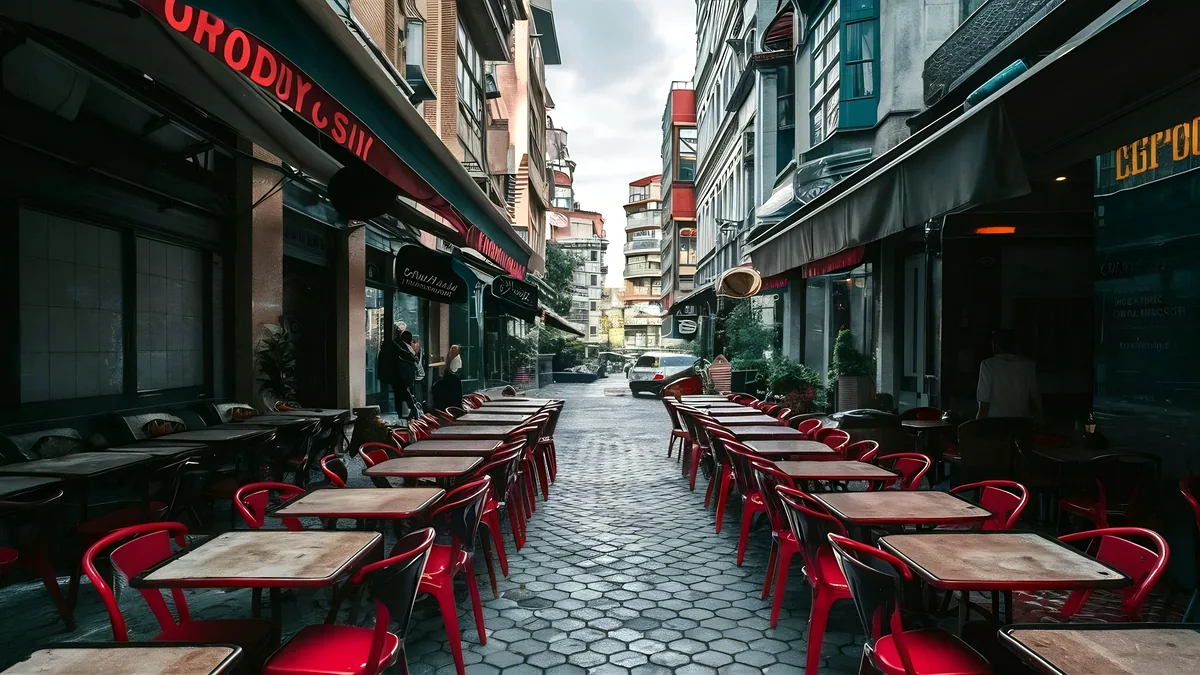
Turkey is a parliamentary republic of 81 provinces whose constitutional framework runs through 3 main institutions: the president, the Grand National Assembly, and the courts, including the constitutional court established in 1961 and the Court of Cassation, the country's highest civil court. The standing structure of Turkey concentrates executive power in the presidential system adopted by referendum in April 2017, a shift that removed the prime minister's office and made the president the head of the executive. Within that structure, the Kurdish Question in Turkey remains the deepest unresolved issue, touching language, representation, security and the fate of the HDP, which was closed by a court in August 2021 on the grounds of being a center of separatist activity. Press Freedom in Turkey is the clearest barometer: journalists, courts and prosecutors share the space, and the number of detained journalists has at times reached more than 100, among the highest in the world.
What "human rights in Turkey" covers today
The term "human rights in Turkey" is a definition-first phrase: it names a field of inquiry, not a single institution, and its working definition is the condition of the civil and political rights guaranteed by the 1982 Constitution, the European Convention on Human Rights, which Turkey has ratified since 1954, and the Universal Declaration of Human Rights. Three domains anchor the field: freedom of expression, which reaches the press, universities and social media; the right to a fair trial, which reaches prosecutors, the judiciary and the state of emergency decrees that followed the failed coup attempt of 15 July 2016; and the rights of the Kurdish population and other minorities, which reaches the HDP, the language courts and the municipalities of Istanbul and Ankara. The state of emergency was declared within hours of that 2016 event and formally lifted on 19 July 2018; it produced more than 500 emergency decrees, the so-called OLAks, which suspended rights and enabled mass dismissals. In the years since, the Emergency Law No. 674 of 2017 kept key dismissal powers alive, and the 2019 constitutional court ruling that closed a channel of the RTCK, the country's main broadcaster, showed how the same court can both protect and constrain the press.
The institutions that decide outcomes
The institutions that decide human rights outcomes in Turkey operate at 4 levels, and their interaction, not their written mandates, explains the current picture. At the constitutional level, the constitutional court rules on individual applications since the 2010 amendment, a reform that gave citizens direct access after a court ruling, a right exercised more than 600,000 times in its first decade. At the legislative level, the Grand National Assembly holds 600 seats, of which the CHP, the main opposition party, controls 169, and its committees examine the very OLAK decrees that suspended rights. At the executive level, ministries issue the regulations that close channels, dismiss staff and regulate the internet; the Ministry of Interior leads on the dismissals, while the Ministry of Justice leads on the courts. At the judicial level, the European Court of Human Rights in Strasbourg remains the last resort: its judgments, such as the 2016 case against the detention of journalists and the 2020 case on the closure of the HDP, bind Turkey under the 16th protocol of the Convention. The 2019 election, which returned the CHP to a parliamentary role that reshaped municipal politics, shows the same dynamic at the ballot box: the institutions hold, and the outcomes shift.
The court, the prosecutor, the journalist
The court, the prosecutor and the journalist form a triangle in which each can move the other. The constitutional court struck down an anti-terrorism law provision in 2021, the prosecutor's office opened an investigation into the court itself in 2022, and journalists at outlets such as the daily newspaper covering Istanbul and Ankara report both events under the same press law. The 2023 election returned the balance of power in the Assembly, and the 2024 local elections returned the CHP to the mayoralties of Istanbul and Ankara, which in turn returned municipal control over public spending, public land and public hiring to a party that campaigns on a rights platform. Each of these moves changed the practical meaning of the same rights in the same city within 2 years.
The pressures: media, politics and the street
The pressures on the human rights landscape in Turkey come from 3 quarters, and each one has its own calendar. The media quarter runs on the press law of 1950 and the 2017 amendment to it, and it produces the ranking numbers: the 2024 assessment by Reporters Without Borders placed Turkey at 161 of 180, the same year the country's 5 largest dailies faced 12 administrative fines for publishing court records. The political quarter runs on the electoral calendar of June 2023 and March 2024, and it produces the institutional numbers: 600 seats, 169 for the CHP, and the 2 municipalities of Istanbul and Ankara returned to opposition control. The street quarter runs on the right to assemble, and it produces the enforcement numbers: 2023 recorded more than 1,000 assembly cases prosecuted under the 2005 Anti-Terror Law, the same law whose 2017 amendment expanded its reach to speech. The 2016 emergency, the 2019 court ruling and the 2023 election are the 3 anchors of this decade, and each one moved the same 100,000-dismissal figure, the 161 ranking and the 1,000-assembly count by a different mechanism.
Where Turkey sits in the wider order
Where Turkey sits in the wider order depends on 2 memberships, and its human rights record is read through both. The Council of Europe, of which Turkey has been a member since 1949, is the first: its Court of Human Rights in Strasbourg issues the binding judgments, and its Parliament of 320 members can suspend rights as a sanction, a step taken against several members but not, as of 2025, against Turkey. NATO, of which Turkey has been a member since 1952 and which counts 32 members in total, is the second: Turkey hosts the Incirlik base, which serves about 40,000 personnel across the alliance, and it uses that leverage in the alliance's human rights dialogue. The regional order completes the picture: Turkey's 769 km southern border with Syria, its 210 km eastern border with Iraq, and its 427 km eastern border with Armenia place it at the center of the 3 refugee and displacement flows that the UNHCR tracks in the region, and the country hosts about 3 million registered Syrian refugees, the largest number in the region. The 1923 founding of the republic, the 1954 ratification of the Convention and the 2017 shift to the presidential system are the 3 dates that a regional reader uses to place the current picture in the order.
How to read the current picture
How to read the current picture of human rights in Turkey is a method, and the method is to track 5 indicators, each of which is published on a known cycle and each of which can be verified in a public source. The 5 indicators are: the press freedom ranking, published yearly and standing at 161 of 180 in 2024; the count of detained journalists, tracked by the Istanbul-based press association and standing at 60 in 2025; the number of administrative dismissals still under the 2017 law, which the government has placed at 120,000 in total; the number of constitutional court individual applications per year, which has fallen from 100,000 in its peak year to about 30,000 by 2024; and the number of assembly prosecutions, which stands at more than 1,000 in 2023. The indicators interlock: the 2023 election moved the 169-seat figure, which moved the OLAK review, which moved the dismissal count, which moved the 161 ranking. The 3 anchor dates, 1923, 1954 and 2017, give each indicator its horizon, and the 2 memberships, the Council of Europe and NATO, give each one its external check. A reader who follows the 5 numbers across 2 elections holds the current picture of human rights in Turkey in a form that survives the news cycle.