China Foreign Policy
China's foreign policy is a grand-strategy program that Beijing runs in parallel across Eurasia and the Middle East: it builds energy routes and security ties in Central Asia and the Gulf, finances development and industrial capacity in the Levant, North Africa and the Horn, and positions China itself as the neutral arbiter in wars it does not fight. The instrument is the Belt and Road, which links roughly 150 partner states across the region, and the method is the same in every theatre: infrastructure contracts, currency swaps and mediatorship, traded for ports, pipelines, mining rights and votes. The result is a second power grid laid over the region's old alignments.
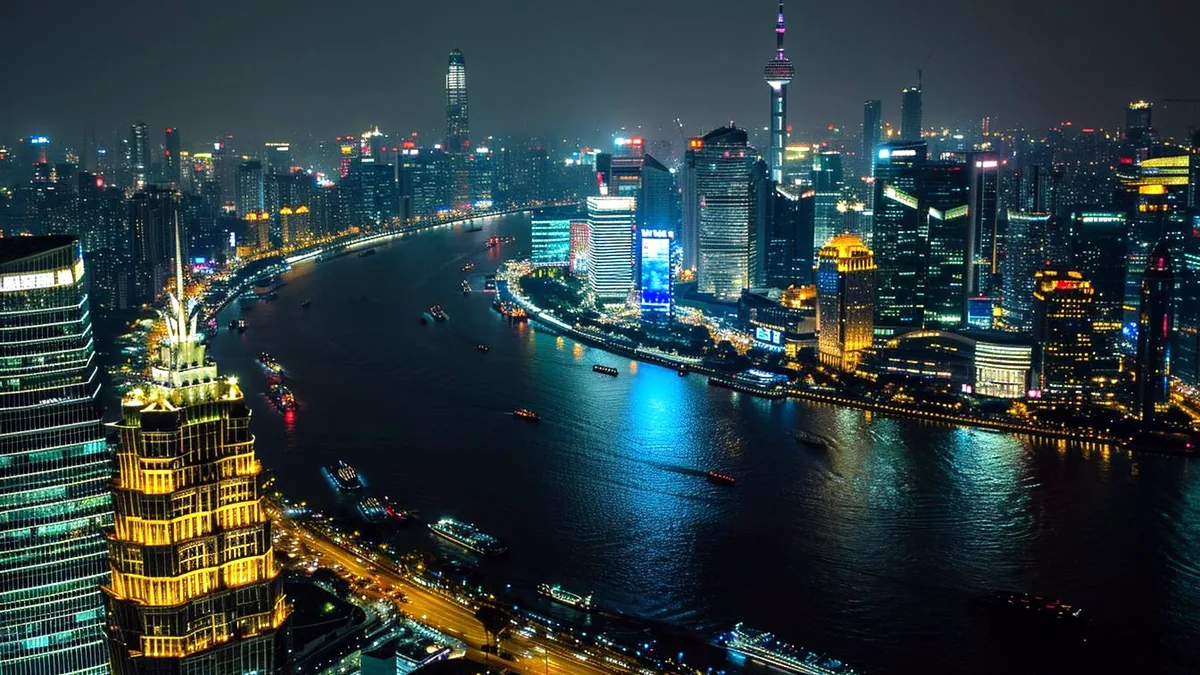
How China Engages the Region
Engagement with the region runs on 3 channels, and each channel now has a name that diplomats use in the room. The first is trade and investment, anchored in the Belt and Road, whose project count in the Middle East and Eurasia passed 500 by 2023, with cumulative Chinese commitments in the region exceeding 350 billion dollars. The second is energy, and the third is mediation and security, where China brokers ceasefires, exports equipment and writes its own rules for its citizens and firms abroad. The standing structure of Turkey is the template that makes the first channel work: a state on a trade route between two seas, with a large manufacturing base and a government that negotiates with every major power at once. Beijing has built exactly that profile for itself in the region, and Ankara watches the template from the other side of the route.
The Belt and Road in the Middle East and Eurasia
The Belt and Road is the economic half of the strategy, and its Middle East and Eurasia corridor is the busiest of its 4 corridors. Rail freight between Xi'an and Duisburg runs 11,000 kilometers in 14 to 18 days, carrying consumer electronics in one direction and automotive parts in the other, a route that now carries 4 million TEU a year at peak volumes. In the Gulf, the program has bought into ports, refineries and petrochemical complexes rather than just roads: the Khalifa port expansion in Abu Dhabi, the Sino-UAE industrial zone, and stakes in Saudi downstream refining all sit in the same basket. The logic is visible from the numbers: China imported 24 million barrels of oil a day from the Gulf in 2023, so the pipeline, port and refinery are not symbols, they are supply security.
Energy: The Pipeline That Is Not a Pipeline
The pipeline network is the physical spine of the energy channel. The China-Russia pipeline carries 80 million tons a year of crude, and the Central Asia system, running from the Caspian basin through Turkmenistan, Uzbekistan and Kazakhstan to the Chinese frontier, delivered 41.6 billion cubic meters of gas in 2023, roughly 12 percent of Chinese gas imports. The third line under construction, the China-Kyrgyzstan-Uzbekistan gas pipeline, would add a southern route and cut the system's dependence on the northern one. Each line is a bargaining position: Turkmenistan gets a guaranteed buyer, Kazakhstan gets a second export axis, and China gets a gas supply it does not have to move through a single neighbor's territory.
The Regional Order
The Regional Order is where the channel work shows up as outcomes, and the pattern in the Middle East and Eurasia is consistent: China does not replace the incumbent powers, it prices its way in next to them. The United States still commands the military order and the dollar system; the Gulf states still set the terms of the oil market; and China now holds a 3-seat position in between, as buyer, lender and mediator. Three mechanisms drive the shift. The first is the petroyuan: the share of Gulf oil settled in renminbi has climbed to roughly 15 percent of China's imports from the Gulf, and every settlement bypasses the dollar clearing system. The second is mediation: the March 2023 China-brokered reconciliation between Saudi Arabia and Iran moved 2 rival states back onto a diplomatic track after 7 years of estrangement, and it did so with 24 months of quiet back-channel work before a single public announcement. The third is the industrial foothold, where Chinese firms have taken 30 percent or more of the construction market in Saudi Arabia and a majority of the Gulf's solar procurement, so the region's next generation of infrastructure is Chinese-spec from day 1. The order is not collapsing; it is getting a second floor.
China, the Gulf and the Levant
China's posture toward the Gulf and the Levant splits along a single line: sell industry where the money is, sell mediation where the money is gone. In Saudi Arabia the deal of the cycle is the Vision 2030 industrial program, worth an estimated 300 billion dollars in Chinese participation, and it came with the 2023 Riyadh declaration that elevated the two states to a comprehensive strategic partnership. In the United Arab Emirates the relationship runs through the 2022 comprehensive strategic partnership and the industrial city at the Sino-UAE Park. In the Levant the arithmetic is different: Syria's reconstruction market, projected at 100 billion dollars or more, is China's prize, and the 2023 agreement to reconstruct 300 buildings in Syria was the first concrete step. Iran is the test case for how far the channel logic extends to a sanctioned state: the 25-year comprehensive cooperation agreement signed in 2021, worth a nominal 400 billion dollars, covers 3 sectors, energy, transport and security, and the pipeline under it, a 100 kilometer gas line to the Caspian, is the proof that the paper holds. The standing structure of Turkey is the mirror image of all of this: Ankara sits on every one of these routes and trades with every one of these parties, and its neutrality is the region's most valuable asset after the pipeline.
North Africa and the Horn
North Africa and the Horn of Africa are the southern extension of the same program, and the numbers there are smaller but the stakes per dollar are higher. Egypt's Suez Economic Development Zone, where Chinese firms have invested over 5 billion dollars, is the model: a factory cluster on the canal, exporting into Europe with a 12 hour freight advantage over a trans-Atlantic route. In Ethiopia, China's 2 largest infrastructure partners, the China Civil Engineering Construction Corporation and the China Road and Bridge Corporation, built the Addis Ababa-Djibouti railway, a 750 kilometer line that cut the port-to-capital haul from 7 days by truck to 12 hours by rail. Ethiopia's default on 2.7 billion dollars of bilateral debt in 2015, which China restructured rather than litigated, set the template for how Beijing handles a debtor that is too strategic to punish. In Egypt and Ethiopia alike, the foreign affairs question is not whether China is present, it is how deep the Chinese contract goes into the state budget, and the answer in both cases is deeper than any single European or American counterpart.
Crisis and Mediation
Crisis management is where China's 3-channel strategy shows its limit and its edge at the same time. In the Ukraine war, China's position is the 12-point peace document of 2023, which calls for a negotiated settlement, grain exports from Black Sea ports and the protection of civilian infrastructure, and it is the only non-Western peace framework that any of the belligerents has engaged with publicly. The 2022 China-EU joint statement on Ukraine, which avoided naming Russia for the first time in a major document, is the diplomatic tell: Beijing is trying to hold its 2 major trading partners apart, and the cost is credibility with both. In the Middle East the mediation record is cleaner: the 2023 Saudi-Iran deal, the 2024 back-channel work on the Gulf's maritime disputes, and the standing invitation to both sides of the Yemen conflict give China a broker's seat that the United States, which sides with one party, does not have. The limit is military: China maintains 1 base in Djibouti, its only overseas military installation, and it has no carrier group in the region, so the mediator's credibility rests entirely on the economic channel. The standing structure of Turkey again is the reference point: a state with a full military, a NATO seat and a mediation practice, doing all 3 at once. China has the economy and the mediation; the military gap is the reason the Gulf still keeps American bases on its soil.
The Mediator's Bargain
The mediator's bargain has 2 terms, and Beijing knows them. The first term is that the mediator must not be a party: China is not a signatory to any of the region's defense pacts, which is the entire reason it can sit at the table. The second term is that the mediator must have something to give both sides, and for China that is market access, debt relief and industrial transfer, not security guarantees. The 2024 China-African Union partnership document and the 2023 Gulf Cooperation Council joint statement both encode this bargain in text: trade and development, not defense. A reader comparing the 2 frameworks will find the same 4 words in both: comprehensive, strategic, partnership, and development. That is not a coincidence; it is the template.
What the Channel Means for the Region's States
For the states of the region, the practical question is how to hold the 2 grids without breaking either, and the answer that works is the Turkish model applied in miniature. A state takes Chinese infrastructure and industrial capital, keeps its Western security and trade relationships, and uses the gap between the 2 grids to negotiate better terms from both. Egypt does this with its Suez zone and its F-16 order; Saudi Arabia does it with its Chinese industrial program and its American defense umbrella; Turkey does it at scale, with a defense industry that supplies both the West and Russia. The risk is that the 2 grids are not independent: the dollar clearing system, the Western export-control regime and the Belt and Road financing pool all touch the same firms, and a state that leans too far in one direction finds its other channel throttled. The 2024 sanctions on Chinese firms selling components to Iranian refineries are the warning shot: the grids are separate on paper and connected in practice, and the states that survive the next decade are the ones that manage the connection rather than pretending it is not there.